Two-Year-Old Language Development: A Dad's Guide
Key Takeaways
Discover how to boost your two-year-old's language development with practical, dad-tested strategies. Learn causes, solutions, and prevention tips for expectant parents.
Two-Year-Old Language Development: A Dad's Guide
You've probably heard that toddlers are little sponges, absorbing everything around them, especially language. It's not quite right. While they are certainly learning at an incredible pace, their development isn't passive. It requires active engagement and a supportive environment. As a first-time dad navigating parental leave, I've learned that fostering language in my two-year-old isn't just about talking at them; it's about creating a rich, responsive world where they feel encouraged to explore and express themselves. In this guide, I'll share what I've learned about the common challenges, their underlying causes, practical solutions, and how to maintain that progress, all from a dad's unique perspective.
The Stumbling Blocks: Common Language Hurdles at Two
Around the two-year mark, kids are often expected to be stringing together short sentences and understanding a good chunk of what's said to them. But what happens when your little one seems to be lagging? Perhaps they're still primarily using single words, or their understanding of instructions seems limited. Maybe they get frustrated because they can't articulate their needs, leading to tantrums. This isn't uncommon. I remember feeling a pang of worry when my son, Leo, was consistently using only 2-3 word phrases at 24 months, while other kids his age seemed more verbal. The problem isn't necessarily a developmental delay, but often a mismatch in the learning environment or a need for more targeted support.
Specifically, common issues include:
- Limited Vocabulary Expansion: Stuck with around 50-100 words when closer to 200-300 is typical.
- Difficulty with Two-Word Phrases: Struggling to combine words into simple sentences like 'more juice' or 'daddy go'.
- Poor Comprehension: Not following simple directions like 'pick up the block' or 'give me the ball'.
- Increased Frustration and Meltdowns: Stemming from an inability to communicate desires or needs effectively.
These aren't isolated incidents; they are often interconnected signs that the current approach to language stimulation might need a tweak.
Why the Language Lag? Unpacking the Causes
Understanding why these hurdles appear is the first step to overcoming them. It’s rarely a single factor, but a combination of influences. For me, realizing the role of interaction, routine, and even my own communication style was crucial. Toddlers thrive on connection, and their language development is deeply intertwined with the quality and quantity of their social interactions.
Several root causes contribute to slower language progress:
Insufficient Interactive Input: While toddlers hear a lot of words, they need conversational input. This means back-and-forth exchanges, not just one-way monologues. If screen time dominates, or if adults are often distracted, the opportunities for rich dialogue shrink significantly. For example, if a parent is constantly on their phone while interacting, the child misses out on spontaneous language modeling and responsive feedback.
Lack of Variety in Language Exposure: Hearing the same phrases or vocabulary repeatedly without new exposure can limit growth. Language development benefits from a broad range of words, sentence structures, and contexts. If a child is primarily exposed to a limited set of familiar routines and words, their expressive and receptive language will reflect that.
Over-Reliance on Gestures and Non-Verbal Cues: While gestures are important, a child who consistently relies on pointing or grunting, and has their needs immediately met, might not feel the urgency to develop verbal communication. Parents, in an effort to be responsive, might inadvertently reduce the need for the child to vocalize.
Limited Opportunities for Imaginative Play: Play is a toddler's work. Engaging in imaginative scenarios provides a natural context for practicing new words and sentence structures. Without structured or free play time that encourages storytelling or role-playing, this valuable learning avenue is underutilized.
Environmental Stress or Overstimulation: A chaotic or overly demanding environment can make it difficult for a child to focus on and process language. Conversely, a very quiet, under-stimulating environment might not provide enough linguistic 'fuel'. Finding a balance is key.
In my experience, these causes are often subtle. It wasn't that I wasn't talking to Leo, but I wasn't always talking with him in a way that actively invited his participation and expansion.

Building Blocks for Better Babbling: Step-by-Step Solutions
Once we understand the 'why,' we can focus on the 'how.' These are strategies I've implemented with Leo that have made a noticeable difference. The key is consistency and making language learning a fun, integrated part of daily life.
1. Elevate Everyday Conversations
The Strategy: Turn routine activities into language-rich experiences. Narrate your actions, describe what you see, and ask simple, open-ended questions.
In Practice:
- During Diaper Changes: Instead of just changing the diaper, I might say, 'Let's get this clean diaper on! This one is soft and blue. Where are your feet going? Into the clean diaper!'
- Meal Preparation: 'We are washing the carrots. They are orange and crunchy. Can you help me put them in the bowl?'
- Getting Dressed: 'This is your striped shirt. It has red and yellow stripes. Does it feel soft? Yes, it does!'
Why it Works: This constant, contextualized language exposure provides a rich stream of vocabulary and sentence structure without feeling like a lesson. It normalizes verbal interaction.
2. Expand and Extend Their Utterances
The Strategy: When your child says a word or a short phrase, echo it and add a word or two to create a slightly more complex sentence.
In Practice:
- Child says: 'Ball.'
- Your response: 'Yes, a red ball!' or 'You want the ball!'
- Child says: 'Mama up.'
- Your response: 'Mama will pick you up!' or 'You want mama to pick you up.'
Warning: Don't over-correct or demand perfection. The goal is modeling, not testing. This technique is sometimes called 'recasting' and is incredibly effective for showing children how to build on their existing language skills.
3. Read, Read, and Read Some More (Actively!)
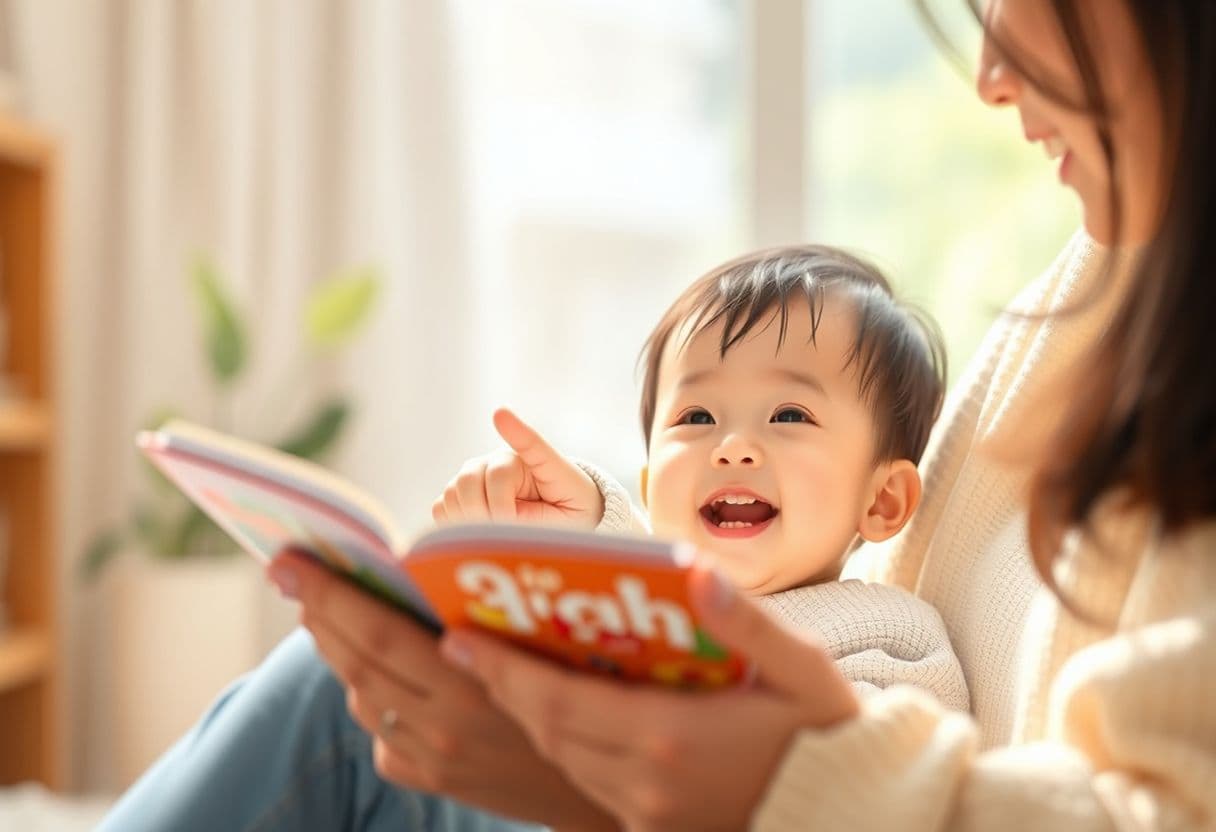
The Strategy: Reading aloud is fundamental, but make it interactive. Point to pictures, ask questions about what's happening, and let your child turn the pages.
In Practice:
- Choose books with bright illustrations and repetitive phrases. Books like 'Brown Bear, Brown Bear, What Do You See?' are excellent.
- Pause and ask: 'What do you think the bear is doing?' or 'Can you find the blue bird?'
- Don't be afraid to re-read favorite books. Repetition builds familiarity and confidence.
Number: Aim for at least 15-20 minutes of reading time each day, broken into 2-3 sessions if needed. Some studies suggest even 10 minutes per day can have a significant impact.
4. Incorporate Music and Rhymes
The Strategy: Songs and rhymes are fantastic for language development because they provide rhythm, repetition, and predictable patterns.
In Practice:
- Sing simple nursery rhymes like 'Twinkle, Twinkle Little Star' or 'Itsy Bitsy Spider'.
- Use actions with the songs to enhance comprehension and engagement.
- Listen to age-appropriate music during car rides or playtime.
Why it Works: The melodic nature of songs helps children remember words, and the rhyming patterns introduce them to sound similarities, a precursor to phonological awareness.
5. Encourage Imaginative and Parallel Play
The Strategy: Provide opportunities for your child to engage in imaginative play, either on their own or alongside you.
In Practice:
- Set up a play kitchen with toy food and utensils.
- Use dolls or action figures to create simple scenarios: 'The baby is hungry. Let's feed him.'
- Sit with your child and engage in parallel play, doing your own activity nearby but commenting on theirs. 'Oh, you're building a tall tower! It's very high!'
Number: Dedicate at least 30 minutes daily to unstructured play time where language can flourish naturally.
Maintaining Momentum: Preventing Language Plateaus
Language development is a marathon, not a sprint. Once you've implemented these strategies, the focus shifts to consistency and adapting as your child grows. Preventing a plateau involves continuous engagement and a keen observation of your child's evolving needs.
Here’s how to keep the momentum going:
- Listen Actively: When your child attempts to communicate, stop what you're doing and give them your full attention. This shows them their voice is valued.
- Introduce New Experiences: Visit new places, meet new people, and explore new activities. Novelty provides fresh vocabulary and conversational topics.
- Use Open-Ended Questions: As their language skills improve, transition from 'yes/no' questions to those that encourage more detailed responses, such as 'What happened next?' or 'How did that make you feel?'
- Don't Shy Away from Books About Feelings: Books that explore emotions can help toddlers find words for their internal experiences, leading to richer communication.
- Model Problem-Solving Verbally: When challenges arise, talk through how you're going to solve them. 'The toy is stuck. Let's try to wiggle it gently.'
Common Mistake: Expecting your child to suddenly be a fluent speaker. Language development is gradual. Celebrate small victories, like a new word or a clearer sentence, rather than focusing solely on the end goal.

Frequently Asked Questions
How can I encourage my two-year-old to speak more words?
To encourage more words, create a language-rich environment and opportunities for verbal interaction. Frequently narrate your actions during daily routines, expand on your child's utterances by adding a word or two, and read books together, pointing to pictures and asking simple questions. Play games that involve naming objects and actions. The key is consistent, playful, and responsive interaction, making sure your child sees the benefit and fun in using words.
What if my child is still not combining two words by 24 months?
It's understandable to be concerned, but remember that developmental timelines are ranges. If your child is otherwise meeting developmental milestones and is receptive to language, focus on the strategies mentioned above: expanding their utterances, engaging in conversations, and reading daily. If you have significant concerns, it's always best to discuss it with your pediatrician, who can provide personalized guidance and, if necessary, refer you to a speech-language pathologist for an assessment.
Is it okay to correct my toddler's grammar?
At this age, direct correction of grammar can be counterproductive and discouraging. Instead of saying, 'No, it's I went,' try recasting their sentence correctly. If they say, 'I goed,' you can respond with, 'Oh, you went to the park! That sounds like fun!' This models the correct grammar without making them feel wrong, allowing them to learn naturally through exposure and gentle guidance.
Conclusion
Fostering language development in your two-year-old is one of the most rewarding aspects of early parenthood. It’s about more than just words; it’s about connection, understanding, and building a foundation for lifelong learning. We’ve explored how common hurdles often stem from insufficient interactive input and lack of variety, and we’ve outlined practical, step-by-step solutions including narrating daily activities, expanding their utterances, and making reading interactive. To keep the momentum going, remember to listen actively and introduce new experiences.
Your specific action today: Choose one daily routine, like mealtime or bath time, and commit to narrating your actions and describing what you're doing for the next 10 minutes. Notice how your child responds, and celebrate any new vocalizations or words they offer.
Previous
Screen Time Limits for Kids: A Parent's Guide
Next
Two-Year-Old Language Development: A Dad's Guide